
Patterns
What’s Shaping My Thinking Now

There’s a phrase I keep coming back to lately:
patterns have a way of repeating themselves
I’ve been working in real estate since 1984—which means I’ve lived through multiple market cycles, policy shifts, and neighborhood transformations. I’ve watched neighborhoods decline and revive, seen lending standards tighten and loosen, experienced both the over-correction after 2008 and the speculation that preceded it.
When you’ve witnessed the patterns play out over 40+ years, you start to recognize the rhythms. Not exactly. Not with the same players or headlines. But the underlying dynamics—how confidence distorts decision-making, how policy creates unintended consequences, how neighborhoods change—those show up again and again if you know what to look for.
That’s why I’ve been deliberately studying historical cycles. Here’s what’s shaping my thinking right now.
Reading: The Power of Historical Patterns
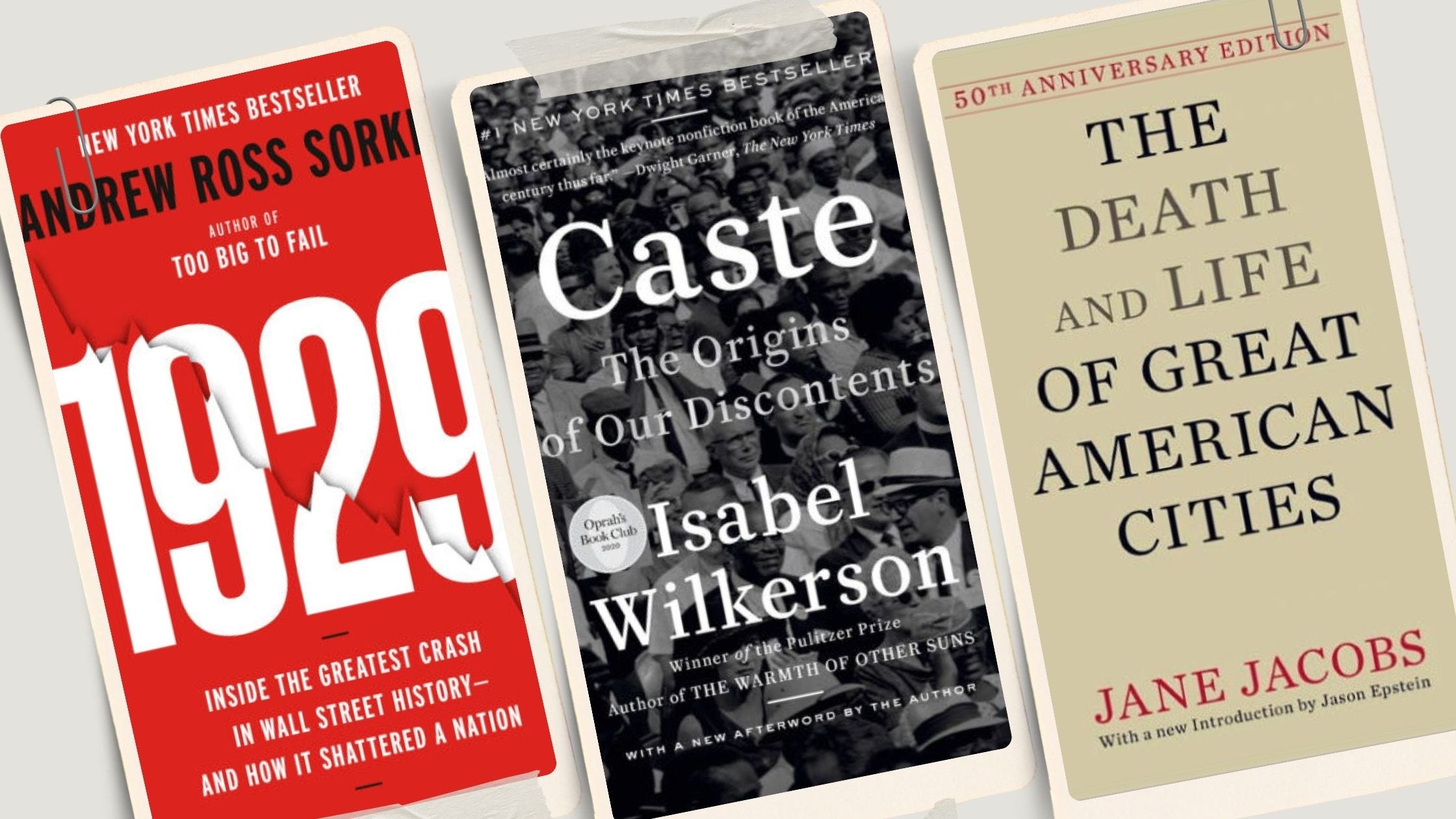
1929: The Year That Changed Everything
I picked up this book after watching a market I’ve tracked for years behave in ways that felt uncomfortably familiar. The fundamentals looked solid on paper, but something in the velocity of change reminded me of transitions I’d seen go sideways before.
What struck me most wasn’t the financial mechanics of the 1929 crash—though those are instructive—but the confidence patterns leading up to it. The collective certainty that “this time is different.” The dismissal of warning signs as noise. The acceleration of speculation as validation rather than caution.
In real estate, we see versions of this constantly. A neighborhood starts to turn, and suddenly everyone wants in. Cap rates compress. Underwriting gets creative. The risk that should make you pause gets reframed as opportunity cost for not moving faster.
I’m not suggesting we’re headed for a crash. I’m suggesting that understanding how confidence distorts decision-making helps me ask better questions when evaluating properties. When everyone in the room is certain about a market’s trajectory, that’s precisely when I want to understand what we might be missing.
Who should read this: Anyone making decisions in fast-moving markets who wants to understand how momentum can obscure risk.
Caste: The Origins of Our Discontents
This one’s been on my list for years, and I thought I’d give it a re-read. Isabel Wilkerson’s analysis of caste systems—the invisible hierarchies that shape society—has profound implications for understanding housing markets and neighborhood development.
Here’s what matters for my work: housing isn’t just about supply and demand. It’s shaped by centuries of systematic decisions about who gets to live where, who gets access to capital, who gets written out of neighborhood narratives entirely.
When I’m evaluating markets, understanding the caste dynamics that created the current conditions matters as much as the pro forma. Why is this neighborhood “affordable” in the first place? What policy decisions and lending practices created the opportunity gap we’re trying to address? And how do we avoid replicating those same exclusionary patterns in new forms?
Wilkerson’s framework helps me see the difference between projects that genuinely expand access and those that simply reshuffle who gets locked out.
Who should read this: Anyone in real estate, urban planning, policy, or community development who wants to understand the structural forces that created the markets we’re working in today.
The Death and Life of Great American Cities
I’m back in Jane Jacob’s book again because it remains more relevant than most contemporary development theory.
Jacobs wrote this in 1961, taking on the urban planning establishment who were designing cities that looked brilliant on paper—superblocks, separated uses, wide streets—while destroying what actually makes neighborhoods function: density, mixed use, eyes on the street, the informal networks that create safety and community.
Her core argument: the experts designing cities had it backwards.
This week, I was comparing two properties in similar submarkets. Property A looked better on paper—newer construction, better unit mix, institutional backing. But Property B had what Jacobs would recognize immediately: the bodega that stays open late, the variety of people moving through at different hours, the street-level activity that creates organic security and retention.
Guess which one has better occupancy and lower turnover?
If you work anywhere that you’re shaping how people live—real estate, development, government, policy—this is foundational. Not because Jacobs has all the answers, but because she asks the right questions.
Who should read this: Anyone evaluating neighborhoods who wants to understand what makes them actually work, not just what makes them look good in a pitch deck.
Watching: How Policy Created Today’s Markets
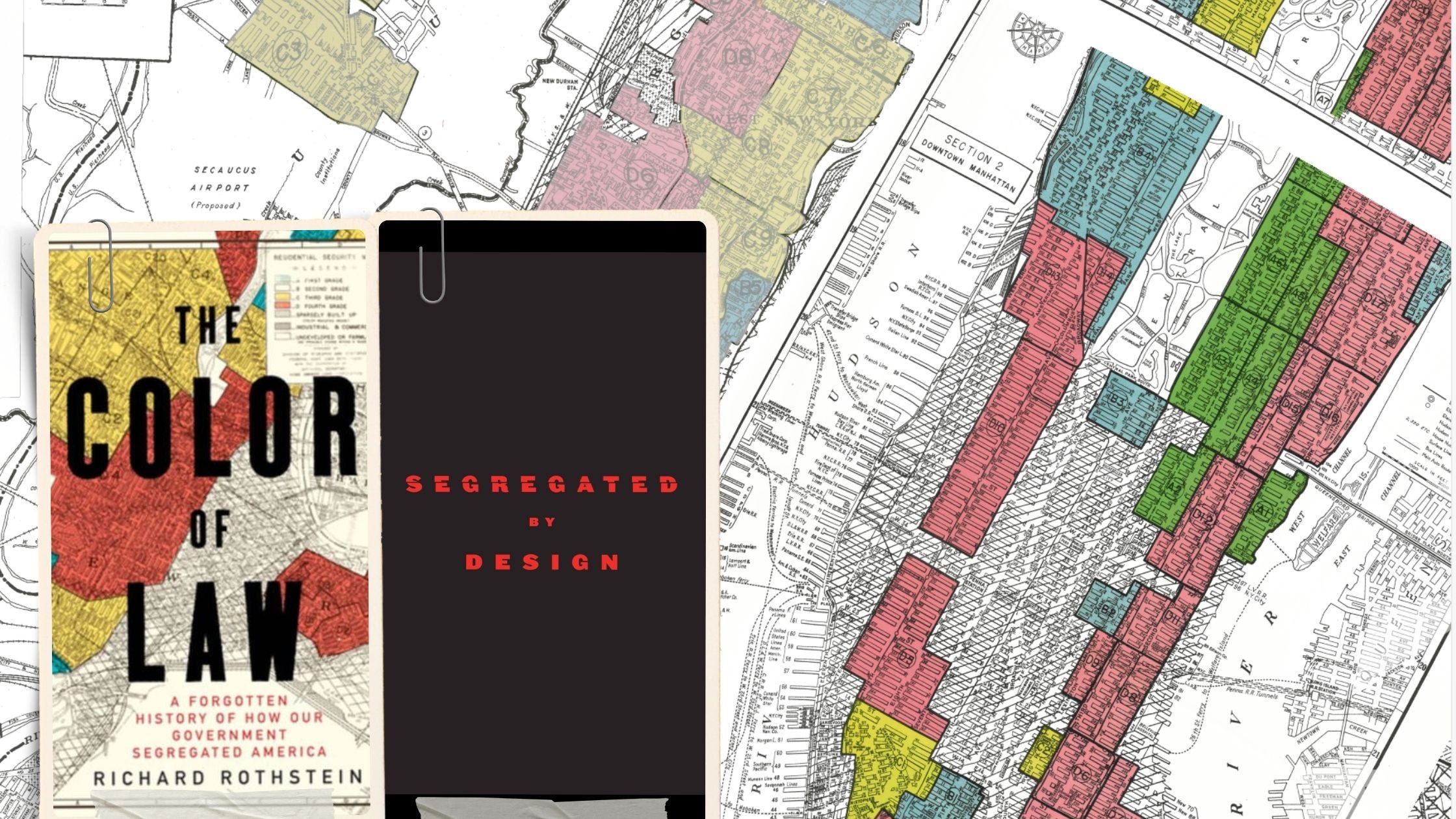
Segregated by Design
I discovered this documentary recently, and it completely reframed how I think about housing policy and neighborhood development.
The film traces how federal, state, and local governments deliberately segregated American cities through policy—not as accidental byproduct, but as intentional design. Redlining, restrictive covenants, highway placement, public housing siting decisions. Each choice was calculated.
What makes this essential viewing: it’s not ancient history. The policies may have been written decades ago, but the physical infrastructure and wealth gaps they created are still shaping markets today.
When I’m working with housing providers in markets from Boston to rural Montana, understanding why certain neighborhoods look the way they do—why wealth concentrated in some areas and was systematically extracted from others—changes the conversation about what intervention actually means.
You can’t solve a problem if you don’t understand how it was created.
Who should watch this: Anyone working in affordable housing, community development, or urban planning. Anyone who wants to understand how policy decisions created the market conditions we’re navigating today.
The Color of Law: A Forgotten History of How Our Government Segregated America
Richard Rothstein’s book provides the detailed policy analysis behind the Segregated by Design documentary. Where the film shows you the visual impact, Rothstein’s research documents exactly how federal, state, and local governments deliberately created segregation through specific, traceable policy decisions.
This isn’t abstract history—it’s the blueprint that created the markets we work in today. Understanding which policies created wealth in some neighborhoods while extracting it from others isn’t just educational; it’s essential for anyone trying to address housing inequity rather than perpetuate it with better branding.
Who should read this: Anyone who works with government housing programs, policy makers, developers navigating requirements, or investors who want to understand why certain markets have the characteristics they do.
Listening: Market Intelligence + Unexpected Inspiration


My podcast rotation lately has been deliberately eclectic—balancing market intelligence with perspectives that push my thinking beyond real estate.
The Economist and Prof G pods keep me grounded in macro trends and market dynamics. When you’re working nationwide, you need that 30,000-foot view of where capital is moving and why.
Emma Grede’s Aspire podcast was an unexpected addition, but her conversations about building businesses with intention and managing growth strategically have been surprisingly applicable to how I think about scaling our team and maintaining culture as we expand into new markets.
And of course, Clarendon’s MarketRent podcast —our deep dives into affordable housing markets and real-time market dynamics that provide context you can’t get from lag-indicator data.
What ties these together: they all challenge me to think beyond the immediate project and consider the broader systems and trends shaping decisions.
Explore my full Listen shelf →
Anticipating: The Look by Michelle Obama

I’m eagerly awaiting the release of Michelle Obama’s latest book, The Look. Her previous work has consistently offered perspectives on leadership, authenticity, and navigating complex environments that extend far beyond their immediate subjects.
What I appreciate about her writing: the ability to find universal insights in deeply personal experiences. That’s something I aspire to in my own Sunday Reflections—making the personal professionally relevant without losing either the intimacy or the applicability.
Find it on my Now shelf when it’s released →
The Thread: Understanding Cycles to Navigate What’s Next

If there’s a theme connecting everything right now, it’s this:
the patterns repeat, even when the context changes
Understanding housing policy from the 1930s helps me evaluate projects today. Studying confidence cycles from 1929 helps me ask better questions when everyone’s bullish. Learning how cities were deliberately segregated helps me see which interventions might actually work versus which ones simply maintain the status quo with better branding.
None of this is about predicting the future. It’s about developing pattern recognition—the ability to see what’s actually happening beneath the surface noise.
That’s what makes the difference between reacting to markets and understanding them.
What’s On Your Shelf?
This is what’s shaping my thinking right now. I’d love to know what’s shaping yours.
What are you reading, watching, or listening to that’s changing how you see your work? Reply and let me know—I’m always looking for recommendations.
Eve Moss is the Founder and Managing Principal of Clarendon, a commercial real estate firm specializing in housing markets nationwide. With 30+ years of experience, she operates from New York, Boston, and Cleveland, serving housing authorities, investors, and policymakers.
For inquiries about market analysis, valuation, brokerage services, or strategic advisory, contact eve.moss@clarendon.com or visit clarendon.com.
Everything at evemoss.com → Market Intelligence. Mindful Living.
Subscribe to receive:
Quarterly market reports
Market intelligence updates
Analysis of housing policy changes
Insights from 30+ years in real estate